How to choose aluminum oxide suitable for architectural decoration?
The selection of aluminum oxide suitable for architectural decoration needs to be comprehensively judged from two dimensions: project requirements (scene, design and budget) and material core performance (quality, technology and adaptability), so as to avoid paying attention to the price and ignoring the long-term use effect. The following is a step-by-step selection guide covering key decision points:
First, make clear the "basic requirements of the project": lock the core suitable formula direction of materials.
Different architectural scenes (outdoor/indoor, high humidity/high temperature, crowded people/low frequency of use) have great differences in the performance requirements of aluminum oxide. The first step is to clarify four core requirements to avoid blind selection:
Requirements for key consideration points of demand dimension sample scenarios
Outdoor use of the scene needs to focus on "weather resistance and corrosion resistance"; Indoor need to focus on "appearance texture and environmental protection"-outdoor curtain wall: need to resist acid rain and ultraviolet aging;
-Door cover of indoor elevator: scratch-resistant and VOC-free.
Modern and simple design style needs "solid color/matte"; Retro style needs "imitation wood grain/bronze color"; Landmark buildings need "special-shaped modeling"-Wenlv buildings: wood-like oxidized materials (visually close to natural wood);
-Commercial complex: it needs bright champagne color (to enhance the sense of exquisiteness)
Safety standards High-rise buildings need to be "lightweight and fireproof"; Hospitals/schools need "class A fire protection and no harmful substances"-high-rise building curtain wall: lightweight aluminum (reducing structural load);
-Underground garage decoration: it needs to be moisture-proof and fire-proof.
The budget covers the whole life cycle cost (initial procurement+later maintenance), not just the unit price-the budget is limited: choose the thickness of conventional oxide film (10-12 μ m);
-Long-term use (≥15 years): Select thick oxide film (15-20μm).
Second, the core performance screening: grasp the "three key indicators" to avoid inferior materials.
The performance core of oxidized aluminum is determined by anodic oxidation process, and the following three indexes need to be checked, which are the key to distinguish "high-quality materials" from "inferior materials":
1. Oxide film thickness: the "basic defense line" that determines durability.
Oxide film is the core of anti-corrosion and anti-scratch of aluminum. Insufficient thickness will directly shorten the service life, so the corresponding thickness should be selected according to the scene:
Outdoor scenes (curtain wall, railing, canopy): oxide film ≥15μm must be selected (GB/T 5237.2-2017 requires outdoor use ≥15μm), and coastal areas (high salinity) are recommended to choose 18-20μm, which can resist sea breeze corrosion;
Indoor scenes (ceiling, wall, door cover): 10-12μm oxide film can be selected (to meet the daily scratch resistance and lower cost);
Detection method: The supplier is required to provide the "oxide film thickness detection report" (spot sampling with eddy current thickness gauge, 3-5 points are randomly measured in each batch, and the error is less than 1 μ m); Avoid selecting inferior materials (easy to fade and rust) with "no test report and thickness less than 8 μ m".
2. Surface quality: the intuitive embodiment of appearance and practicality.
The surface quality directly affects the decorative effect, and at the same time reflects the accuracy of the production process. There are three key points to check:
Color uniformity: there is no "color difference" in the same batch of materials (especially customized colors, such as bronze and black). When observed with naked eyes, there is no obvious difference in depth between different profiles;
Surface smoothness: no bumps, scratches, bubbles and spots (inferior materials are prone to "pinholes" or "bulging" due to many impurities in the base material);
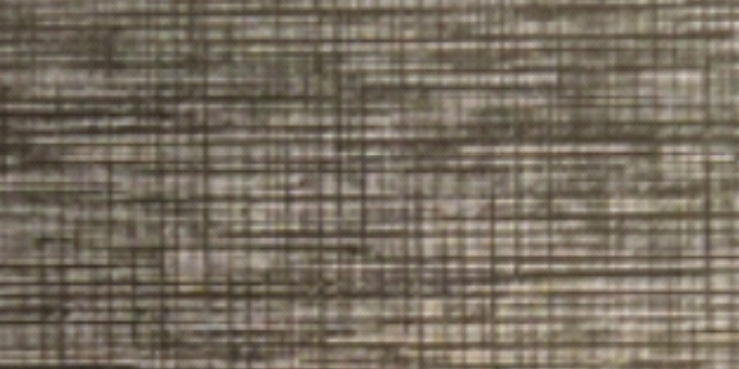
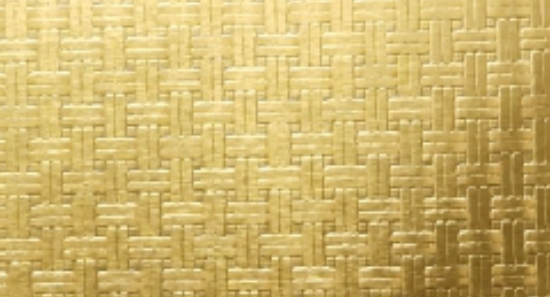
Texture consistency (if imitation wood grain/stone grain is selected): the texture splicing is smooth, without dislocation or fracture (2-3 profiles are used for splicing test to observe whether the texture joint is natural).
3. Corrosion resistance: the "core assessment item" of outdoor scenes
Especially in coastal areas, high pollution (industrial areas) and high humidity (southern Meiyu area), it is necessary to confirm the corrosion resistance grade of materials, which can be verified in two ways:
The supplier is required to provide a "salt spray test report": outdoor materials must pass the neutral salt spray test for ≥1000 hours (the oxide film is free from peeling and corrosion after the test);
Simple on-site identification: wipe the surface repeatedly with a rag stained with neutral detergent (such as detergent) without fading or scratches; After washing with clear water, there is no residual watermark on the surface (inferior film is easy to absorb water and will leave water stains).
Third, technology and customization ability: matching special needs (shape, color, size)
If the project has "personalized design requirements" (such as special shape, customized color, special size), it is necessary to focus on evaluating the supplier's technological ability to avoid "design difficulties":
Modeling processing capacity:
If arc-shaped, hollow-out, bending and other special-shaped parts are needed, it is necessary to confirm whether the supplier has "CNC bending machine, laser cutting machine" and other equipment, and can provide "sample trial" (to avoid deviation from the design drawing after actual processing);
Note: The ductility of aluminum material is limited, and complicated modeling (such as arc with too small radius) may lead to cracking of oxide film, so it is necessary to communicate with suppliers about "process feasibility".
Color customization ability:
If unconventional colors (such as gray and blue with specific color numbers) are needed, the supplier shall provide "color card samples" (at least 2-3 versions shall be debugged to ensure consistency with the design colors);
Caution: Some small factories have no independent coloring ability and rely on purchased color paste, which is prone to "batch color difference". It is recommended to choose manufacturers with "independent anodic oxidation production line".
Dimensional accuracy:
Building decoration requires close splicing of profiles (such as curtain wall keel and skirting line), and it is necessary to confirm the dimensional tolerance: the length deviation is ≤±1mm/m/m, and the section size deviation is ≤±0.5mm (spot check with tape measure and caliper);
If "super-long profile" (such as curtain wall lines over 3m) is needed, it is necessary to confirm whether the supplier can produce "jointless whole profile" (to avoid leaving seams at the joint, which will affect the appearance and sealing).
Fourth, supplier selection: avoid "three pits" and ensure delivery and after-sales.
High-quality suppliers can not only provide qualified materials, but also solve installation and after-sales problems. The following risk points should be avoided when selecting:
1. Avoid "unqualified small workshops"
Required qualifications: Business license (business scope includes "anodizing aluminum alloy processing"), national standard GB/T 5237.2-2017 certification and environmental protection filing certificate are required (anodizing is a chemical process, manufacturers without environmental protection filing may not meet the emission standards, and materials may contain heavy metals);
Preference: Suppliers who have more than 10 years of production experience and have served similar projects (like building curtain walls) can request "case reference" (such as the application case of aluminum oxide in a hotel/residence).
2. Confirm "delivery and after-sales guarantee"
Delivery cycle: the delivery time of customized color/special-shaped parts needs to be confirmed (about 7-10 days for conventional color and 15-20 days for customized color) to avoid delaying the construction period;
After-sales commitment: written commitment is required that "color difference and unqualified oxide film thickness can be returned", and "5-year warranty" is required for outdoor materials (covering issues such as oxide film falling off and corrosion);
Installation support: If required by the project, the supplier who can provide "installation guidance" can be given priority (such as providing sectional joint diagram and installation tool suggestion) to reduce on-site construction mistakes.
3. Beware of the "low price trap"
If there is aluminum oxide in the market whose unit price is much lower than that of peers (for example, the unit price of conventional 12μm film is less than 20 yuan/m), the high probability is to "reduce the thickness of oxide film (for example, only 8μm) and use recycled aluminum substrate";
Calculate the "life cycle cost": inferior materials may fade and rust in 3-5 years and need to be replaced, but the total cost is more than 30% higher than that of high-quality materials. Don't compromise because of short-term low prices.
Fifth, the last step: sample verification+small batch trial assembly
After determining the supplier, two "verification actions" need to be completed before the formal mass purchase to ensure foolproof:
Full performance test of samples:
Take 1-2 samples and simulate the actual use scene test: outdoor materials can be exposed to the sun for 72 hours (to observe whether they fade) and soaked in clear water for 7 days (to observe whether they rust); Indoor materials can be tested for scratch resistance (lightly scratched with a key without obvious scratches).
Small batch trial installation:
Procurement of 50-100m materials, trial installation at the project site (such as splicing a curtain wall and installing a door cover), and inspection:
Whether the size is suitable (whether the splicing gap with other decorative materials such as glass and stone is uniform);
Whether the appearance meets the design expectation (whether the color and texture under the light are up to standard);
Whether the installation is convenient (whether the hole position and buckle of the profile are accurate).
Summary: Choose a logical formula
Following the logic of "first determine the scene requirements → then check the film thickness/surface/corrosion resistance → match the customization ability of the process → screen reliable suppliers → sample fitting verification", we can avoid the selection error to the greatest extent, ensure that the aluminum oxide not only meets the decorative effect, but also can be used stably for a long time, taking into account the "face value" and "practicality".