Kunshan Huapin Aluminum Co., Ltd. Introduction: What are the specifications for embossed aluminum plates?
The specification requirements of embossed aluminum sheet are the core basis for its adaptation to different application scenarios (such as architectural decoration, non-slip floor, household appliance shell, traffic equipment, etc.), which should be comprehensively defined from three dimensions: basic material parameters, embossing process characteristics, appearance and performance indicators, and at the same time meet industry standards (such as China GB/T 3880, American ASTM B209, European Union EN 485, etc.). The following is the detailed disassembly of specific specifications:
First, the basic material and size specifications
This is the "base parameter" of embossed aluminum sheet, which determines the basic performance and adaptation scene of the sheet. The core includes alloy model, state, thickness, width and length.
1. Alloy type (core performance determinant)
The strength, corrosion resistance and machinability of aluminum plates with different alloy compositions vary greatly, so they should be selected according to their uses:
Typical brand core characteristics of commonly used alloys applicable scenarios
Pure aluminum 1050, 1060, and 1070 have high purity (≥99.5%), good plasticity, strong corrosion resistance, and low strength. Decorative panels, nameplates, low-voltage electrical appliance housings, and scenes with high corrosion resistance requirements.
Al-Mn alloy 3003 and 3004 have higher strength than pure aluminum, good corrosion resistance and excellent welding performance, such as non-slip floors (such as schools and workshops), curtain wall decoration and refrigerator liners.
Aluminum-magnesium alloy 5052 and 5083 have high strength, high corrosion resistance and good fatigue resistance. Exterior decoration of outdoor building curtain wall, ship deck and traffic equipment (wind pressure/weather resistance).
Al-Cu alloy 2024 (less used for embossing) requires high strength (requiring heat treatment) and poor corrosion resistance (such as mechanical protective plate).
2. Sheet state (processability and hardness index)
Through different heat treatment and rolling processes, the aluminum sheet presents different "states", which directly affects the embossing formability and final hardness:
O-state (annealed state): completely softened, with excellent plasticity, suitable for pressing and forming complex patterns (such as deep drawing and three-dimensional patterns), but with the lowest strength.
H-state (work hardening state): after cold rolling or cold working, it is not annealed, with high strength and improved hardness. It is divided into H14 (semi-hard) and H18 (full hard), which is suitable for scenes with strength requirements (for example, the anti-skid pedal needs H14/H16 to avoid deformation).
T-state (heat-treated state): such as T4 (natural aging after solution treatment), which is mainly used for high-strength alloys (such as 2024 and 6061), and is seldom used in embossing processing, because it is difficult to form.
3. Geometric dimensions (adaptive installation and machining)
Thickness: the conventional range is 0.2mm-10mm, which should be selected according to the application:
Decorative panels (such as ceiling and wall): 0.5mm-2.0mm;;
Anti-skid pedal and equipment shell: 2.0mm-6.0mm;;
Heavy structural members (such as car floor): 6.0mm-10.0mm.
Tolerance requirements: according to the national standard GB/T 3880, the general accuracy (±0.05mm-±0.15mm) and the high accuracy (±0.02mm-±0.05mm) shall be determined according to the installation and splicing accuracy requirements.
Width and length:
Width: 1000mm, 1220mm, 1500mm, 1600mm and 2000mm, and the maximum can be customized to 2800mm (combined with the width of the rolling mill);
Length: 2000mm, 2440mm, 3000mm and 6000mm, which can be cut to length according to requirements (transportation restrictions should be considered, and the length of a single sheet is generally less than 12 m);
Straightness: the bending degree per meter is ≤3mm (required by national standard), so as to avoid too large splicing gap (such as curtain wall and ceiling) during installation.
Second, the embossing process and pattern specifications
Embossing is the core "function and decoration" of aluminum plate, and the type, depth and consistency of the pattern directly affect the use effect (such as anti-skid and aesthetics).
1. Pattern type (classified by purpose)
Non-slip pattern: the surface is convex or concave-convex, which increases friction. Common types:
Diamond pattern ("lentil pattern"): most commonly used, the pattern is in a diamond array, the height of the protrusions is 0.3mm-1.0mm, and the anti-skid coefficient is high, which is suitable for stair treads, workshop floors and ship decks;
Five ribs/three ribs: ribs with longitudinal parallel protrusions on the surface, which have both anti-skid and guiding properties, and are used for vehicle pedals (such as buses and forklifts) and equipment consoles;
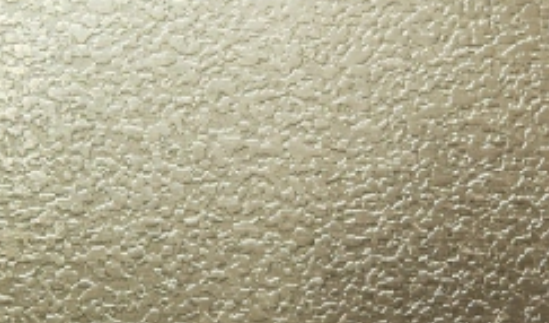
Orange peel pattern ("hammer pattern"): the surface is irregular orange peel, which is non-slip and dirt-resistant, and is suitable for indoor and outdoor non-slip floors (such as school corridors and shopping malls).
Decorative patterns: focus on aesthetics, fine patterns, common types:
Wood grain and stone grain (simulated grain): realized by embossing+laminating process, simulating the texture of wood and stone, and used for interior decoration (walls and furniture panels);
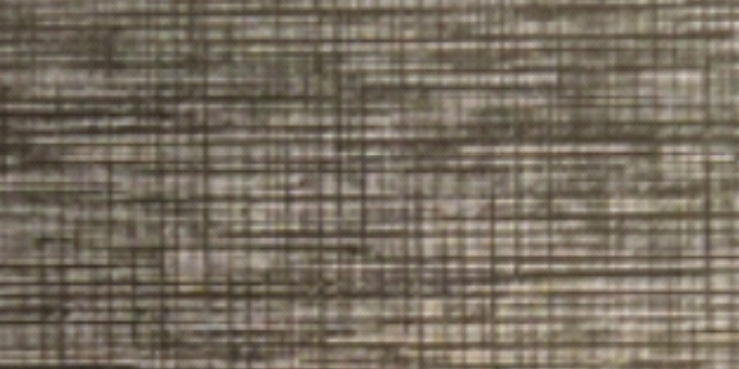
Drawing lines (straight lines/random lines): the surface is continuous parallel lines or disordered lines with fine texture, which is used for household appliances (refrigerators, washing machines) and electronic equipment panels;
Customized patterns: For example, school LOGO and corporate logo, the mold should be opened according to the design drawings, and the depth and spacing of patterns should match the thickness of the plate (to avoid the plate from breaking when embossing).
2. Key parameters of pattern
Pattern depth: generally 0.3mm-1.5mm for non-slip category (the greater the depth, the better the non-slip performance, but the thickness of the plate should be considered, and the depth should not exceed 1/3 of the thickness of the plate to avoid deformation); Decoration is generally 0.1mm-0.5mm (light patterns are more delicate).
Pattern consistency: the pattern spacing and depth deviation of the same batch of plates should be ≤0.1mm to avoid "unevenness" visually (especially for decorative scenes); Pattern coverage rate ≥95%, and large-area "pressure leakage" (non-pattern area) is not allowed.
Embossing direction: Some patterns (such as wire drawing patterns and rib stripes) are directional, so it is necessary to specify "along the length direction" or "along the width direction" to avoid the confusion of patterns during installation (such as the ceiling panel needs to be unified in direction).
III. Appearance and performance specifications (core of quality acceptance)
1. Appearance quality (visual acceptance standard)
Surface defects:
Cracks, delamination, peeling, corrosion spots (oxidation spots) and oil residue (affecting subsequent painting or bonding) are not allowed;
Allowable minor defects: local minor scratches (depth ≤0.03mm, length ≤50mm) and a small number of bubbles (diameter ≤2mm, 3 per square meter ≤), and the "acceptable defect range" shall be specified in the contract.
Color and luster:
True color embossed aluminum plate: the surface is even silvery white without obvious color difference (color difference Δ e ≤ 1.5 in the same batch);
Color embossed aluminum plate (sprayed/coated): the color shall meet the requirements of color card, the deviation of glossiness (such as matte, semi-gloss and high gloss) shall be ≤5%, and the coating adhesion shall meet the standard (the cross-over test shall be ≥GB/T 9286 Grade I).
2. Core performance indicators (adapted to use environment)
Corrosion resistance:
Ordinary scene: Through neutral salt spray test (NSS), the natural aluminum plate has no obvious corrosion for more than 48 hours, and the color coated aluminum plate has no coating shedding and rust for more than 1000 hours;
Outdoor/high corrosion scene (such as near coastal schools and chemical plants): alloy 5052/5083 shall be selected, anodized (oxide film thickness ≥10μm), and salt spray test ≥ 1000h.
Mechanical properties:
Tensile strength: 1060-O state is ≥75MPa, 3003-H14 is ≥ 140 MPa, and 5052-H16 is ≥ 230 MPa, depending on the alloy and state (according to the national standard requirements of the corresponding alloy);
Elongation: O state ≥20% (to ensure embossing formability), H state ≥5% (to ensure that it is not easy to break in use).
Anti-skid performance: the friction coefficient of the anti-skid aluminum plate with pattern needs to be tested, and the friction coefficient is ≥0.6 in dry state and ≥0.4 in wet state (in line with GB/T 4100 anti-skid floor tile standard, and analogy is applicable to aluminum plate).
Fourth, industry standards and customization requirements
Compliance with standards: different regions and fields should meet the corresponding mandatory standards, such as:
China: GB/T 3880 (general industrial aluminum and aluminum alloy plates and strips), GB/T 5237 (aluminum alloy building profiles) and GB/T 23443 (aluminum veneer for building decoration);
EU: EN 485 (rolled aluminum and aluminum alloy products) and EN 12208 (aluminum and aluminum alloy plates for building);
Curtain wall scene of building: additionally meet the requirements of GB/T 21086 (Curtain wall of building) on the strength and weatherability of plate.
Precautions for customization:
Special dimensions (such as ultra-wide 2800mm and ultra-long 12m): it is necessary to confirm the rolling mill and embossing machine capabilities of the manufacturer to avoid being unable to form at one time;
Special patterns (such as customized LOGO): clear CAD drawings should be provided to clarify the requirements of pattern depth, spacing and edge transition, and the mold opening cost should be considered (small batch customization costs are high);
Special performance (such as fire prevention and antibacterial): it needs to be explained in advance, for example, flame retardant coating should be used in fire prevention scene, antibacterial agent (such as silver ion) should be added in antibacterial scene, and third-party test report should be provided.
summary
The specification selection of embossed aluminum sheet should focus on "usage orientation":
Decorative scenes (such as school walls and ceilings): give priority to 1060/3003 alloy, O state/H14 state, thin thickness (0.5-2.0mm), decorative patterns and color difference control;
Anti-skid scenes (such as stairs and corridors): Focus on 3003/5052 alloy, H14/H16 state, thickness (2.0-6.0mm), anti-skid patterns and friction coefficient;
Outdoor scene (such as campus curtain wall): 5052/5083 alloy, anodizing treatment, salt spray resistance and straightness (wind pressure resistance) must be considered.
At the same time, all specifications should be clearly defined in a written contract, accompanied by the material certificate (MTR) and performance test report of the upstream manufacturer to ensure compliance with the project acceptance requirements.