What are the post-treatment processes of alumina plate?
The core of the post-processing technology of alumina plate is to further optimize the appearance texture, functional performance and dimensional accuracy on the basis of "anodizing+sealing" to adapt to different application scenarios (such as architectural decoration, electronic enclosures, mechanical parts, etc.). According to the functional requirements, it can be divided into three major directions: appearance beautification, function enhancement and precision trimming. The specific process and details are as follows:
First, the post-processing of appearance beautification: enhancing vision and touch.
This kind of technology mainly solves the problem of "single appearance of basic oxide plate", and gives the plate colorful colors and diverse surface textures through dyeing and texture processing to meet the decorative needs.
1. Dyeing process (the core appearance treatment)
Principle: The alumina film produced by anodic oxidation is "porous structure" (pore size 10-100nm), which can absorb dye molecules; After dyeing, the dye should be fixed by "sealing process" (hot water/nickel salt sealing) to prevent it from falling off.
Common dye types:
Organic dyes: such as acid dyes and reactive dyes, can dye bright colors such as red, yellow, blue, green and purple, with high color saturation and low cost; However, the sun resistance is weak, and it is suitable for indoor scenes (such as home appliance panels and furniture decorative boards).
Inorganic dyes: such as chromate (dyed green), iron salt (dyed brown) and cobalt salt (dyed blue), which are fixed by chemical reaction between metal ions and alumina film, have strong sun resistance and high temperature resistance, and are suitable for outdoor scenes (such as building exterior panels and outdoor signs).
Special dyeing technology:
Gradient dyeing: by controlling the gradient change of dye concentration and soaking time, the transition effect of color from light to dark is realized;
Two-color/multi-color dyeing: part of the area is shielded by a shielding film, and different colors are dyed in different areas to form a pattern or logo.
2. Surface texture processing: rich touch and texture.
On the basis of dyeing, the surface morphology of the plate is changed by physical or chemical means to avoid the monotonous feeling of "mirror/matte";
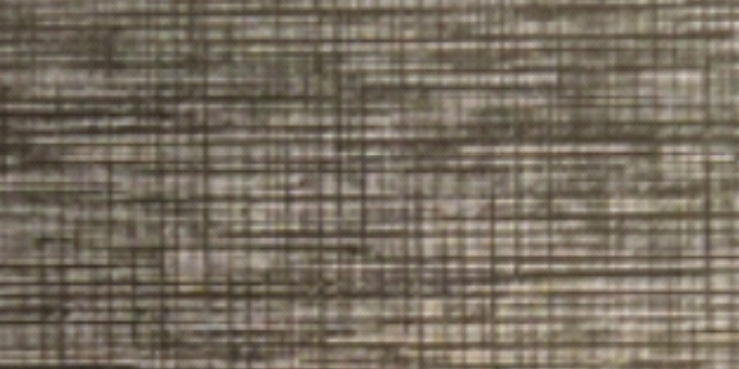
Wire drawing process:
Principle: Use sandpaper or wire drawing wheel (impeller and nylon wheel) to do "one-way straight grinding" on the surface of aluminum plate to form parallel fine lines (such as straight lines, random lines and spiral lines);
Features: The lines are even, and the touch is slightly concave and convex, which can weaken the fingerprint residue. It is often used in the shell of electronic equipment (such as the A side of notebook computer and the middle frame of mobile phone).
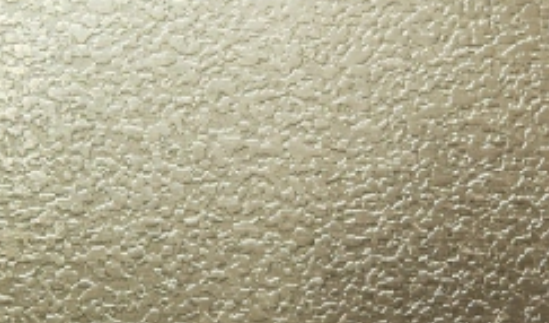
Sand blasting process:
Principle: "Abrasive (quartz sand, alumina sand, glass beads)" is sprayed on the surface of aluminum plate with compressed air at high speed, and a "matte fog surface" or a "fine rough surface" is formed by abrasive impact;
Classification:
Sand blasting with fine sand (sand grain diameter is 50-100μm): the surface is fine and close to "velvet texture", which is suitable for high-end decoration;
Sand blasting with coarse sand (sand grain diameter 100-200μm): rough surface and good anti-skid, suitable for outdoor floors and equipment operation panels.
Etching process:
Principle: Use photoresist to cover the area that does not need to be treated, put the plate into "acid etching solution (such as mixed solution of hydrochloric acid and nitric acid)" and etch the exposed area to form concave patterns (such as characters, logo and patterns);
Features: high pattern accuracy (0.1mm thin lines can be made) and strong three-dimensional sense, which is often used in nameplates and high-end decorative panels.
Second, post-processing of function enhancement: improving durability and special performance.
This kind of technology aims at the problem of "insufficient performance of basic oxide film", and enhances the corrosion resistance, wear resistance and insulation of the plate by coating and special sealing, so as to meet the needs of industry or special scenes.
1. Coating protection process
Cover the surface of the oxide film with a functional coating to form the double protection of "oxide film+coating";
Powder spraying:
Process: Electrostatic adsorption of powder coatings such as epoxy resin and polyester resin on the surface of aluminum plate, and then curing in an oven (180-220℃) to form a film;
Features: The coating has uniform thickness (50-150μm), strong weather resistance and scratch resistance, and many color choices (matte, high gloss and metallic color), which are widely used in building exterior panels and outdoor furniture.
Electrophoretic painting:
Principle: Put the oxidized aluminum plate as an "anode" into an electrophoresis tank containing resin, and the resin particles are adsorbed on the surface of the aluminum plate after electrification to form a uniform paint film;
Features: Fine paint film (thickness 10-30μm), strong adhesion, no sag and pinhole defects, suitable for precision parts (such as automobile parts and electronic component housings).
PVDF coating (fluorocarbon coating):
Special advantages: polyvinylidene fluoride resin is used, which is resistant to ultraviolet rays, acid rain, high and low temperature (-40℃~150℃) and has a service life of more than 20 years;
Application scenarios: ultra-high-end outdoor buildings (such as airports and gymnasiums) and marine environmental equipment (salt spray corrosion resistance).
2. Special sealing and modification
Optimize the "sealing effect" or "chemical characteristics" of oxide film according to specific functional requirements;
Hard anodic oxidation sealing:
Different from ordinary hot water sealing, low-temperature organic acid sealing (such as malonic acid solution) is adopted to further improve the hardness (up to HV300-500) and wear resistance of oxide film, which is suitable for mechanical parts (such as cylinder inner wall and slider guide rail).
Insulation modification:
"Insulating resin (such as epoxy resin)" is filled in the pores of the oxide film, and the insulation resistance on the surface of the plate is increased to more than 10 Ω by drying and curing, which is suitable for electronic insulating components (such as circuit board brackets and insulating gaskets).
Antibacterial treatment:
Adding "antibacterial agent (such as silver ions and zinc oxide nanoparticles)" into the sealing agent makes the oxide film have the ability to inhibit Escherichia coli and Staphylococcus aureus, which is suitable for medical equipment shells and food contact panels.
Third, post-processing of precision trimming: ensure that the size and installation are suitable.
This kind of process does not change the appearance or core performance, and mainly solves the problems such as "dimensional deviation and edge burr of oxidized plate" to ensure the smooth subsequent processing or installation.
1. Cutting and forming
Precise cutting: use laser cutting machine (accuracy ±0.1mm) or numerical control shearing machine to cut large-size alumina plate into finished product specifications (such as square, round and special-shaped parts) required by customers;
Bending forming: the plate is bent into a specific angle (such as 90 right angle and U-shaped groove) by a numerical control bending machine, which is used to make shells and frames (the toughness of the oxide film should be confirmed before bending-the oxide film of pure aluminum plate has good toughness and can be bent; The process of alloy aluminum plate needs to be adjusted to avoid membrane cracking).
2. Edge and surface finishing
Deburring: use grinding wheel, chamfering machine or ultrasonic cleaning to remove sharp burr on the edge after cutting and bending, so as to prevent scratching hands or accessories during installation;
Leveling treatment: If the plate is slightly warped during oxidation and drying, the flatness of the plate is controlled to be ≤0.5mm per meter by "rolling correction" with a numerical control leveler (to meet the requirements of high-precision installation, such as splicing of electronic equipment shells).
3. Punching and tapping
For the plates (such as building decorative boards and equipment panels) that need to be installed, screw holes and positioning holes are processed by using a numerical control drilling machine or laser drilling;
If threaded connection is needed, tap the hole position (note: tapping needs to be controlled to avoid oxide film falling off-usually tapping first and then oxidizing, or partially sealing the thread after tapping).
Summary: Selection logic of post-treatment process
The post-processing of alumina plate is not "the more the better", but reverse matching according to the application scenario:
If you want to "look good": give priority to "dyeing+wire drawing/sandblasting", use organic dyeing indoors and inorganic dyeing outdoors;
If "durable" is needed, "PVDF coating/hard sealing" is preferred, PVDF is selected for outdoor aging resistance, and hard sealing is selected for mechanical wear resistance;
If "precision" is required, "laser cutting+leveling" is preferred to ensure that the size is suitable for subsequent installation.
Through the combination of different post-treatment processes, alumina board can be changed from "basic protective material" to "multifunctional material with both decoration and function", which is also the core reason for its wide application in the fields of architecture, electronics, machinery and so on.