Introduce in detail: the processing technology of frosted embossed aluminum plate
The processing technology of frosted embossed aluminum plate is to treat the flat aluminum plate surface into a composite process with frosted texture and embossed pattern through multiple continuous processes. The core process includes four links: substrate pretreatment, frosted processing, embossed molding and post-treatment. The final product is both anti-slip, wear-resistant and decorative.
First, substrate pretreatment: guarantee the processing foundation
Substrate pretreatment is the key premise to ensure the follow-up process effect, mainly for the original aluminum plate surface cleaning and state adjustment, to avoid impurities affecting the texture adhesion.
Selection of base material: 1 series (pure aluminum), 3 series (aluminum-manganese alloy) or 5 series (aluminum-magnesium alloy) aluminum plates are preferred, and the thickness is usually between 0.2 and 3 mm, which is determined according to the application scenarios (such as decorative panels and non-slip floors); It is necessary to check whether there are scratches, depressions and other defects on the surface of aluminum plate to ensure that the flatness error of the substrate does not exceed 0.1mm/m/m.
Degreasing and cleaning: put the aluminum plate into an alkaline degreasing tank (such as sodium hydroxide solution with a concentration of 5%-8%) and soak it at 40-60℃ for 5-10 minutes to remove oil stains such as rolling oil and dust on the surface; Then it is transferred to an acidic neutralization tank (such as nitric acid solution with a concentration of 3%-5%) to neutralize the residual lye and form a slight oxide layer to avoid corrosion of the substrate.
Water washing and drying: the degreased and neutralized aluminum plate needs to be rinsed with 3-4 times of clear water, and each rinsing time is not less than 2 minutes to ensure that there is no chemical residue on the surface; Finally, enter a hot air drying cham, and drying at that temperature of 80-120 DEG C, wherein the drying time is adjusted accord to the thickness of the aluminum plate, usually 3-5 minutes, and the surface moisture content is ensured to be lower than 0.1%.
Second, matte processing: to create a basic texture
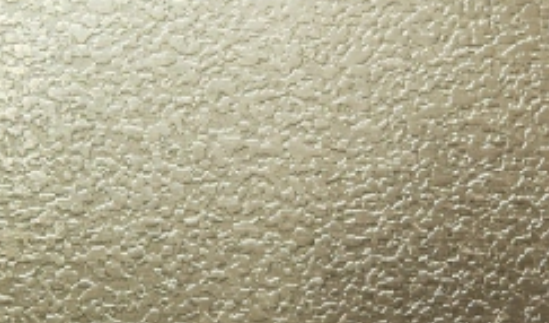
Sanding process removes the surface luster of aluminum plate by physical or chemical means, forming a uniform and rough matte texture, which provides a better pattern attachment foundation for subsequent embossing. Common processes are divided into mechanical sanding and chemical sanding.
Mechanical grinding: the mainstream uses abrasive belt grinding or sandblasting technology. During abrasive belt grinding, the aluminum plate is fixed on the conveyor belt, and the surface is subjected to unidirectional or cross grinding by the abrasive belt with the rotating speed of 1500-2000r/min (the particle size is usually 120-400 mesh, and the higher the mesh number, the finer the grinding is), and the grinding pressure is controlled at 0.2-0.5MPa to ensure the uniform thickness of the grinding layer (usually 5-10 μ m); In the sand blasting process, compressed air (pressure 0.4-0.6MPa) is used to spray emery, alumina and other abrasives onto the surface of aluminum plate to form a more stereoscopic graininess. The grit size of abrasives is 80-320 meshes according to requirements, and the processing time is 1-3 minutes, so it is necessary to ensure that there is no obvious difference in sand marks on the surface.
Chemical Scrubbing: It is suitable for scenes with high requirements for surface accuracy. The aluminum plate is soaked in a scrub solution prepared by phosphoric acid, nitric acid and sulfuric acid in proportion (temperature is 50-70℃), and the surface oxide layer is removed by chemical corrosion to form a microscopic concave-convex structure; The corrosion time is usually 2-5 minutes. It is necessary to monitor the surface roughness in real time to ensure that the Ra value (surface roughness parameter) is controlled between 0.8-3.2 μ m. After the expected matte effect is achieved, it is immediately transferred to a water washing tank to stop the reaction to avoid excessive corrosion.
Third, embossing: giving the pattern texture.
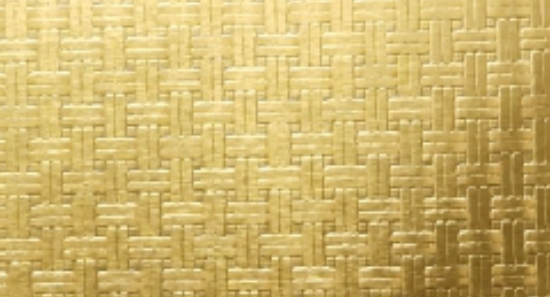
Embossing is the core process of pressing a specific pattern on the frosted aluminum plate surface. The aluminum plate is plastically deformed by mechanical pressure to form a permanent texture, which is mainly divided into two ways: roll molding and die molding.
Roll forming: it is suitable for continuous batch production and is the mainstream technology in the industry. Firstly, an embossing roller (usually made of steel, with raised patterns carved on the surface, with an accuracy of 0.01mm) is made according to the design pattern, and the embossing roller and the support roller are aligned up and down, and the pressure (usually 5-15MPa) and the rotating speed (usually 5-15 m/min) between the rollers are adjusted; The frosted aluminum plate passes between two rollers, and the surface of the aluminum plate adheres to the embossing roller pattern under the pressure to form corresponding concave texture; In order to ensure the clarity of the pattern, it is necessary to control the temperature of the aluminum plate between room temperature and 60℃, so as to avoid the brittleness increase of the aluminum plate caused by too low temperature, the pattern fracture, or the texture deformation caused by too high temperature.
Molding: suitable for small batch and complex pattern processing, such as customized logo and special-shaped pattern. Fixing the frosted aluminum plate in a molding die (the upper die is a pattern punch and the lower die is a concave die), applying pressure (20-50MPa) by a hydraulic press, and keeping the pressure for 10-30 seconds, so that the aluminum plate partially conforms to the shape of the die to form a pattern; Before molding, a small amount of lubricating oil (such as silicon-based lubricating oil) should be applied to the surface of aluminum plate to reduce the friction between the mold and aluminum plate and avoid burrs on the edge of the pattern. After molding, the residual lubricating oil on the surface should be cleaned.
Fourth, post-treatment: improve performance and stability.
The post-treatment process is mainly to enhance the corrosion resistance, wear resistance and decoration of embossed aluminum sheet and prolong the service life of the product. The core includes surface passivation, coating treatment and cutting inspection.
Surface passivation: put the embossed aluminum plate into chromate or chromium-free passivation solution (temperature 25-40℃) and soak for 3-5 minutes to form a passivation film with a thickness of 1-3μm on the surface; Passivation film can isolate air and moisture, greatly improve the corrosion resistance of aluminum plate, and the neutral salt spray test can reach 200-500 hours (depending on passivation process).
Coating treatment: Select coating type according to application requirements, such as polyester powder coating or fluorocarbon coating commonly used in decorative scenes. Powder coating adopts electrostatic spraying process, which evenly sprays the powder coating on the surface of aluminum plate, and then enters a curing furnace for curing at 180-220℃ for 15-20 minutes to form a coating with a thickness of 50-80μm; Fluorocarbon coating adopts multi-layer spraying (primer, topcoat and varnish), and each layer needs to be dried after spraying. The total coating thickness is 80-120μm, which has excellent weather resistance and is suitable for outdoor scenes (such as building exterior walls).
Cutting inspection: according to the customer's demand, the aluminum plate is cut to the specified size by numerical control shearing machine or laser cutting machine, and the cutting accuracy is controlled within ±0.5mm;; Finally, the quality inspection is carried out to check whether there are problems such as incomplete patterns, coating shedding and scratches on the surface, test the adhesion of the texture (the tape is not shed after being marked with a hundred-grid knife) and flatness, and package the qualified products into storage.
On the whole, the processing technology of frosted embossed aluminum plate needs to strictly control the parameters of each link, and each step from the base material to the finished product directly affects the final texture and performance. At present, this technology has been widely used in architectural decoration, home appliance panels, vehicle interiors and other fields, with both practicality and aesthetics.