Introduce in detail: the production process and product characteristics of embossed aluminum plate with wire drawing pattern.
The core of embossed aluminum sheet with imitation wire drawing pattern is to realize the combination of texture and shape through "rolling+surface composite treatment", which can not only restore the delicate feeling of metal wire drawing, but also increase the functionality through embossing, and is widely used in decoration and industrial fields.
1. Manufacturing process of embossed aluminum plate with wire drawing pattern imitation
The whole process revolves around the three core links of "forming-texture-strengthening", which need to go through seven key steps, and each link directly affects the final texture and performance of the plate.
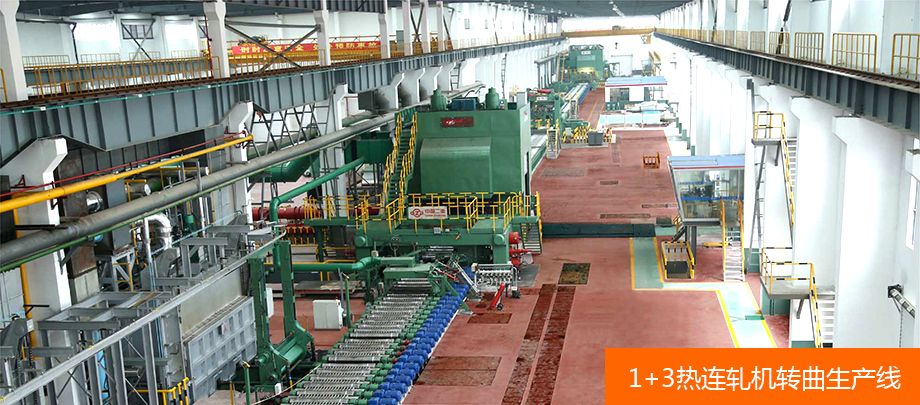
Melting and casting-rolling of raw materials: industrial pure aluminum with purity over 99.0% or commonly used aluminum alloy ingots such as 3003 and 5052 are selected, heated to 700-750℃ in a smelting furnace to melt into molten aluminum, and after impurities are removed, the raw aluminum coil or aluminum plate blank with thickness of 6-10mm is rolled by a casting-rolling mill.
Cold rolling forming: the original blank is sent to a cold rolling mill, and after rolling for several times (usually 3-5 passes), the thickness is gradually reduced to the specifications required by customers (usually 0.3-3mm), and at the same time, the surface smoothness and mechanical properties of aluminum plate are improved.
Annealing softening: The cold-rolled aluminum plate has high hardness and poor plasticity, so it needs to be put into an annealing furnace and kept at 300-400℃ for 2-4 hours to reduce hardness and restore plasticity, so as to prepare for the subsequent surface treatment and embossing process.
Surface pretreatment: use alkaline solution (such as sodium hydroxide solution) to clean the surface of aluminum plate to remove residual oil stain and scale during rolling; Then neutralize with acidic solution, rinse with clean water and dry to ensure that the surface is clean and free of impurities.
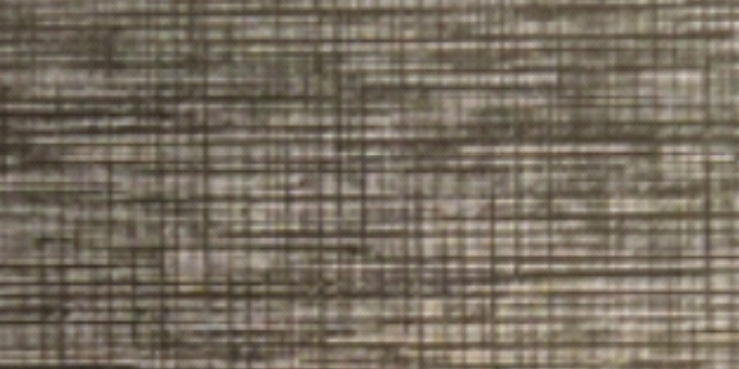
Wire drawing treatment: using special wire drawing equipment, the surface of aluminum plate is mechanically polished in one direction or cross direction by abrasive belt (usually 80-240 mesh) or grinding wheel to form uniform and parallel fine stripes on the surface, simulating the texture of natural wire drawing metal, and the stripe depth is usually controlled at 0.01-0.05 mm.
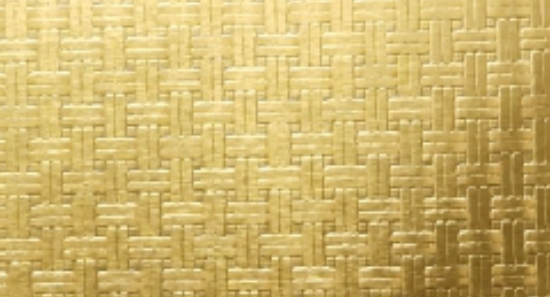
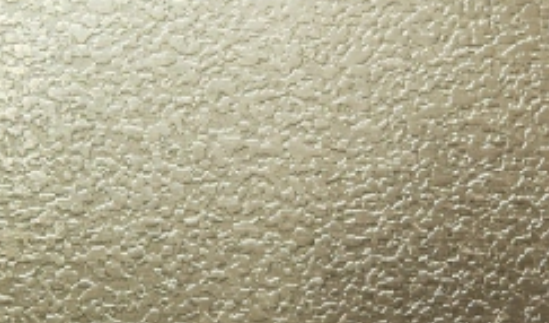
Embossing molding: the aluminum sheet after wire drawing is sent to an embossing machine, and the surface of the aluminum sheet is attached to the embossing pattern under a certain pressure (usually 10-30MPa) and temperature (100-150℃) by the upper and lower groups of pressing rollers with preset patterns (such as diamond, orange peel and stripe) to form a convex or concave embossing pattern, and the embossing needs to be coordinated with the wire drawing texture to avoid mutual interference.
Surface strengthening and finishing: anodizing the embossed aluminum plate, and electrifying it in electrolyte to form an oxide film with a thickness of 5-20μm to improve corrosion resistance and wear resistance; Some scenes will be sprayed with extra fluorocarbon paint or polyester paint to enhance the anti-ultraviolet and anti-scratch ability. Finally, according to the requirements, it is cut to the specified size, and the edge burr is removed to complete the finished product inspection.
Second, the characteristics of embossed aluminum plate with wire drawing pattern
The advantages of the product are concentrated in three dimensions: appearance, performance and processing adaptability, which can meet the requirements of aesthetics and practical use scenarios at the same time.
Strong sense of layering: the combination of fine lines of drawing texture and three-dimensional undulation of embossed patterns breaks the monotony of a single metal surface, and the surface metal luster is soft and directional, which can meet the needs of modern home, architectural decoration, electronic equipment shell and other styles, and has a prominent sense of visual advanced.
Excellent physical properties: after anodic oxidation or coating treatment, the surface energy can resist daily water vapor, slight acid and alkali erosion, and is not easy to rust or fade; The tensile strength (≥150MPa) and yield strength (≥80MPa) of aluminum alloy itself are higher than that of pure aluminum. In addition, the surface structure enhanced by embossing process has stronger deformation and scratch resistance, and it is not easy to scratch or sag after long-term use.
Convenient processing and installation: the density of aluminum plate is only 2.7g/cm³, which is about 1/3 of that of steel. It is light in weight and good in toughness. It can be easily re-processed by cutting, bending, drilling and welding to meet the installation requirements of different scenes. At the same time, the surface of the plate is flat, the gap is small during splicing, and the construction efficiency is high.
Cost and high performance-to-price ratio: Compared with metal wire drawing embossing materials such as stainless steel and copper, aluminum alloy has lower raw material cost, mature manufacturing technology and high mass production efficiency, and can achieve the appearance effect close to high-end metal at a lower cost, which is suitable for batch application in the fields of mid-end decoration, home appliance panels, vehicle interiors and the like.