What should be paid attention to in customizing the surface texture of embossed aluminum plate?
The following is a brief introduction to you: the matters that must be paid attention to when customizing the grain, texture design, mold opening and production of embossed aluminum plate for flat /iPad shell are very practical and can be directly used as design/procurement specifications.
A, grain structure design considerations (the most critical)
The grain depth should not be too deep.
Common thickness of flat shell: 0.6 ~ 1.2 mm.
Suggested embossing depth: 0.05~0.15mm
Too deep can lead to:
The aluminum plate becomes thinner and its strength decreases.
Cracking at bend and distortion of grain at angle R.
Uneven color after anodic oxidation
The transition between the grain bump and the groove should be smooth.
Sharp corners and deep trenches can lead to:
Stress concentration, easy to crack
Uneven oxidation dyeing and black color accumulation.
Arc transition R≥0.05mm must be made.
The grain direction should be unified
The horizontal/vertical direction should be determined in advance.
Multi-piece assembly should ensure that the texture direction is consistent, otherwise the appearance will be messy.
Avoid fine and dense pointy lines.
It is easy to hide oil stains and difficult to clean.
Feel pricked, not high enough.
Second, matching with subsequent processing technology (bending, CNC, anodizing)
There must be no deep lines at the bending position.
It is suggested to make shallow/transitional lines in bending R angle area.
Deep lines will directly lead to bending and cracking
The grain in CNC machining area should be avoided.
Camera hole, key slot, screw post position
The grain will affect the finish milling size and the tool wear will be great.
The grain roughness must be confirmed before anodizing.
The coarser the grain, the darker the color after oxidation.
The finer the grain, the more uniform the color.
The same batch must use the same roller pattern and the same roughness.
Spraying/electrophoresis is not suitable for deep embossing.
Deep lines are easy to accumulate paint, sag and bubble.
Generally, anodic oxidation is preferred for flat shell.
Third, feel and user experience (focus on flat shell)
Can't feel cut and burr.
The peaks and valleys of the grain must be smooth
Sharp stripes will affect the grip comfort
Anti-skid and tactile balance
Shallow lines: poor slip resistance and obvious fingerprints.
Too deep lines: rough to the touch and cheap.
Anti-fingerprint requirement
Irregular fine lines, pearl lines and orange peel lines are preferred.
Avoid large flat smooth areas.
Fit wireless charging and cooling
The grain on the back should not be too high, otherwise the coil fit will be affected.
The lines should not be closed, but should be conducive to the circulation of heat dissipation air.
IV. Matters needing attention in die and rolling process
The embossing roller requires high precision.
Requirements for flat appearance parts: uniform grain, no yin and yang, and no joint marks.
Roll surface runout ≤0.01mm
Selection of aluminum plate hardness
5052-H32 and 6061-T4 are most suitable for embossing.
Too hard (T6), easy to crack and unclear lines.
Too soft and easy to stick to the roller, deformation
The embossing direction is consistent with the rolling direction.
Avoid uneven stretching caused by horizontal stripes and waves on the board surface.
Flatness of embossed plate surface
The grain will slightly warp the board.
The leveler must be calibrated, otherwise CNC machining cannot be carried out.
V. Appearance consistency and mass production control
The grain pitch must be stable
Pitch is big and small → mottled appearance and low grade.
Avoid obvious knife pattern and roller joint printing.
Flat large appearance parts are very taboo.
The lines between batches should be consistent.
Must be the same roller carving factory, the same set of pattern parameters.
Otherwise, the color difference and hand feel are huge.
The grain cannot affect the laser marking and logo.
Deep lines will lead to fuzzy marking
It is recommended to make a light pattern area/smooth area in the logo area.
Six, size and tolerance control
After embossing, the thickness of aluminum plate will increase slightly.
0.02~0.05mm space shall be reserved during design.
The grain will affect the size measurement.
Measure the thickness with the highest point of the bump.
The grain of wide plate should be uniform left and right.
Avoid shallow lines on the edges and deep lines in the middle.
Seven, the application of different grain types.
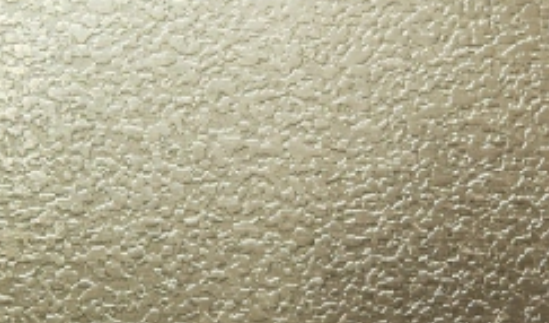
Delicate orange peel: it is most suitable for iPad tablet, with good hand feeling, fingerprint resistance and easy oxidation.
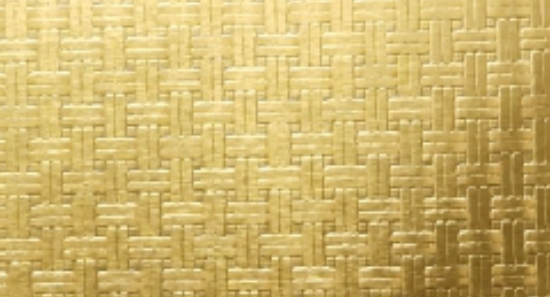
Pearl pattern/ball pattern: high-end feeling, good anti-slip
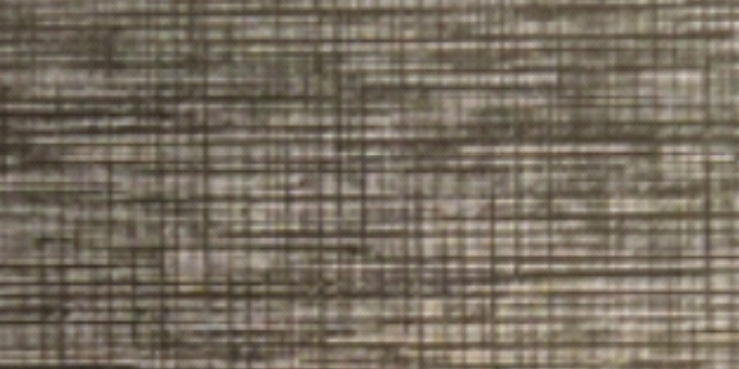
Fine twill/random grain: strong hidden scratches.
Coarse stripe and diamond pattern: suitable for three-proof flat plate, not suitable for thin flagship.
Minimalist summary (design must see)
The depth is 0.05-0.15mm, and the transition must be circular.
The lines in bending area and CNC area should be shallow or avoid.
Preferential anodizing to avoid deep streaking and color accumulation
The lines should be even, without seam marks and smooth to the touch.
The material is 5052/6061 with moderate hardness.